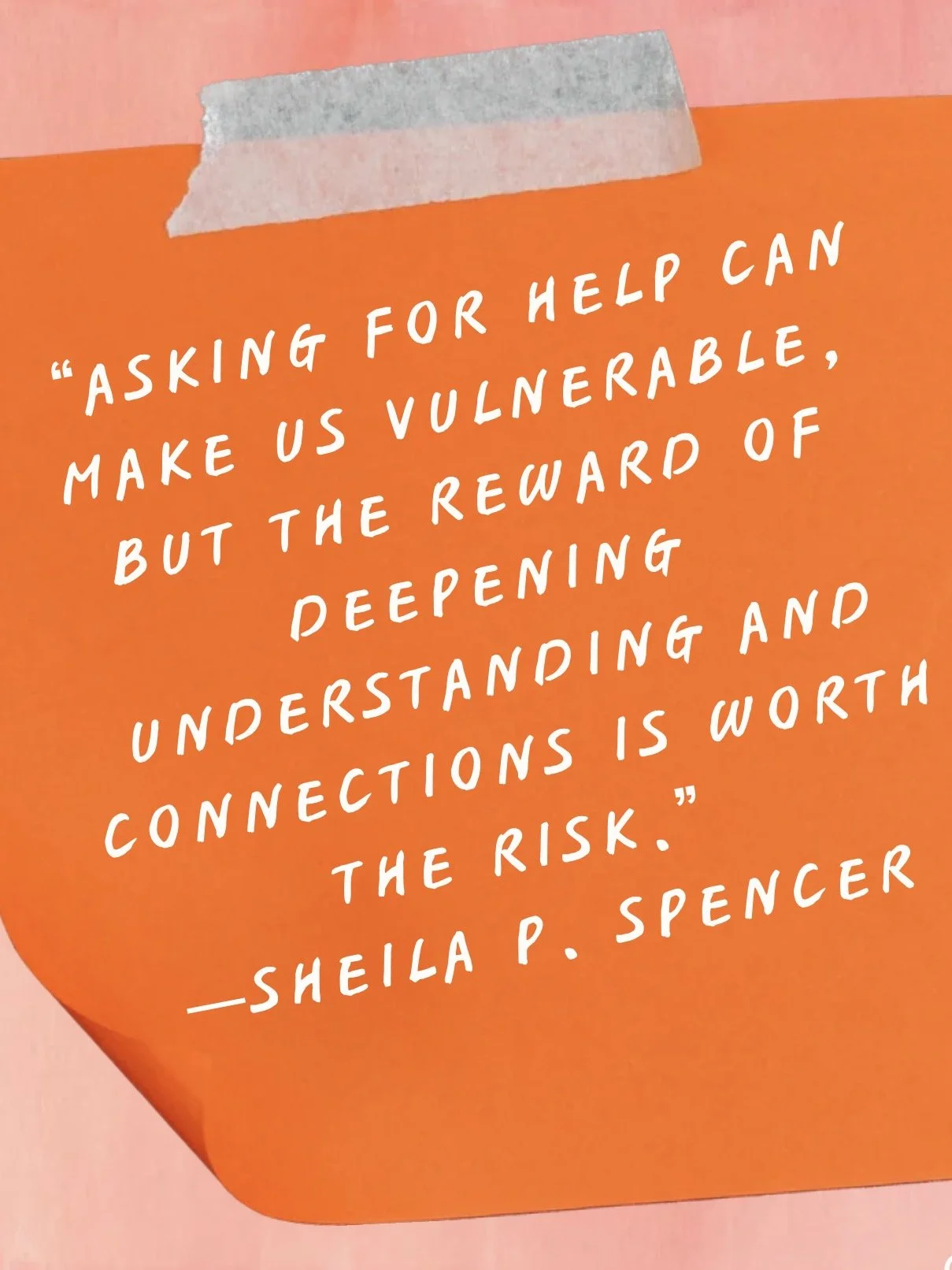
“Asking for help can make us vulnerable, but the reward of deepening understanding and connections is worth the risk.” —Sheila P. Spencer
I remember reading a devotional that simply prayed:
“Lord, help me resist the habit of not asking for the help I need when I need it.”
That line stayed with me.
There was a survey about the four toughest phrases to say.
Can you guess what some of them were?
Take a moment to reflect.
What’s on your list?
One of the top responses:
“I need help.”
In a culture that often idolizes independence, saying I need help can feel like failure. But the truth is—it’s a holy act. These three words carry the power to liberate us. They open us to grace. They remind us that we were never meant to carry it all alone.
And here’s another tough phrase:
“I don’t know.”
But admitting I don’t know is often what frees us to say I need help. It brings us back to the truth of why we live in community. It gives someone else the opportunity to walk in their gifts and support us.
“Sometimes Ms. Spencer doesn’t know—but I’ll find out. Let’s ask for help.”
When I train educators, I encourage them to embrace the same practice. It teaches humility, curiosity, and openness. It teaches that asking is brave.
And God affirms our asking:
“Whatever you ask in my name, this I will do, that the Father may be glorified in the Son. If you ask me anything in my name, I will do it.”
—John 14:13–14“My help comes from the Lord, who made heaven and earth.”
—Psalm 121:2“Ask, and it will be given to you; seek, and you will find; knock, and it will be opened to you.”
—Matthew 7:7
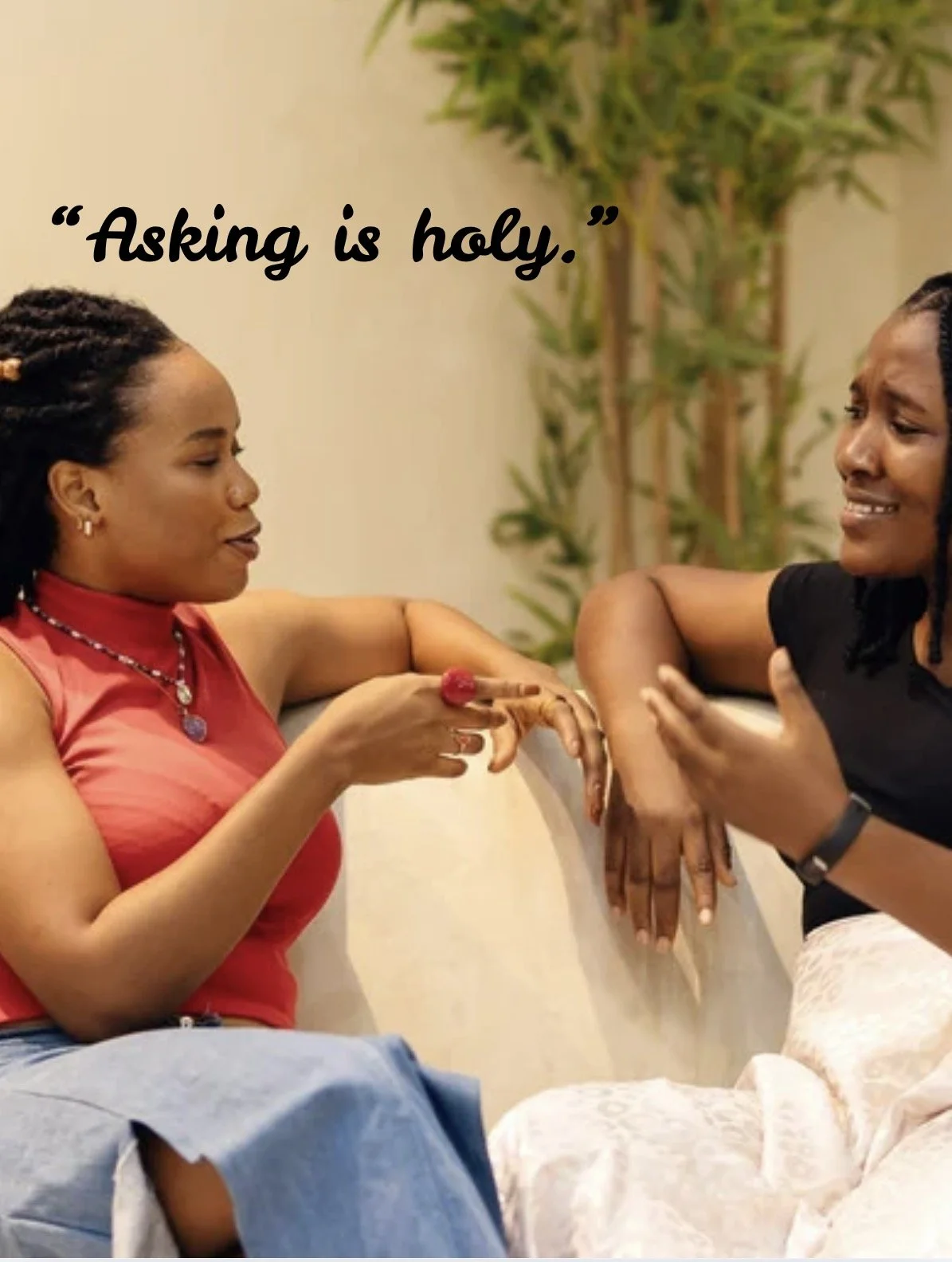
Asking for help is not weakness.
Asking for help is a form of seeking.
Asking allows you to receive the blessing of support, knowledge, and rest.
In just the past few months, I’ve had to ask for help with resources, setting boundaries, creating balance, finding references—questions I could not answer on my own.
And asking wasn’t easy.
Especially as someone who is often the giver, the connector, the one others turn to.
But givers—you especially— you don’t need permission to ask.
Because asking is not just okay.
Asking is holy.
1. Ask Clearly
Name what would actually help you.
“Could you stay with my loved one for two hours this week so I can rest?”
2. Ask Specifically
People often want to help but don’t know how.
“Could you pick up groceries when you go to the store?”
“Would you mind driving us to the doctor’s appointment on Tuesday?”
3. Ask Honestly About Your Needs
Be transparent about what you’re feeling.
“I’m getting tired, and I need a break. Could you sit with my loved one this afternoon?”
4. Ask Creatively
Help doesn’t always mean giving away tasks.
“Could you call and pray with me this week?”
“Would you send me a meal suggestion that’s quick and healthy?”
5. Ask Without Guilt
Remember, asking for help is not weakness—it’s wisdom.
“I can’t do this alone, and I value your support.”
Affirmation
Asking for help is not a weakness—it is an act of strength and sacred trust.