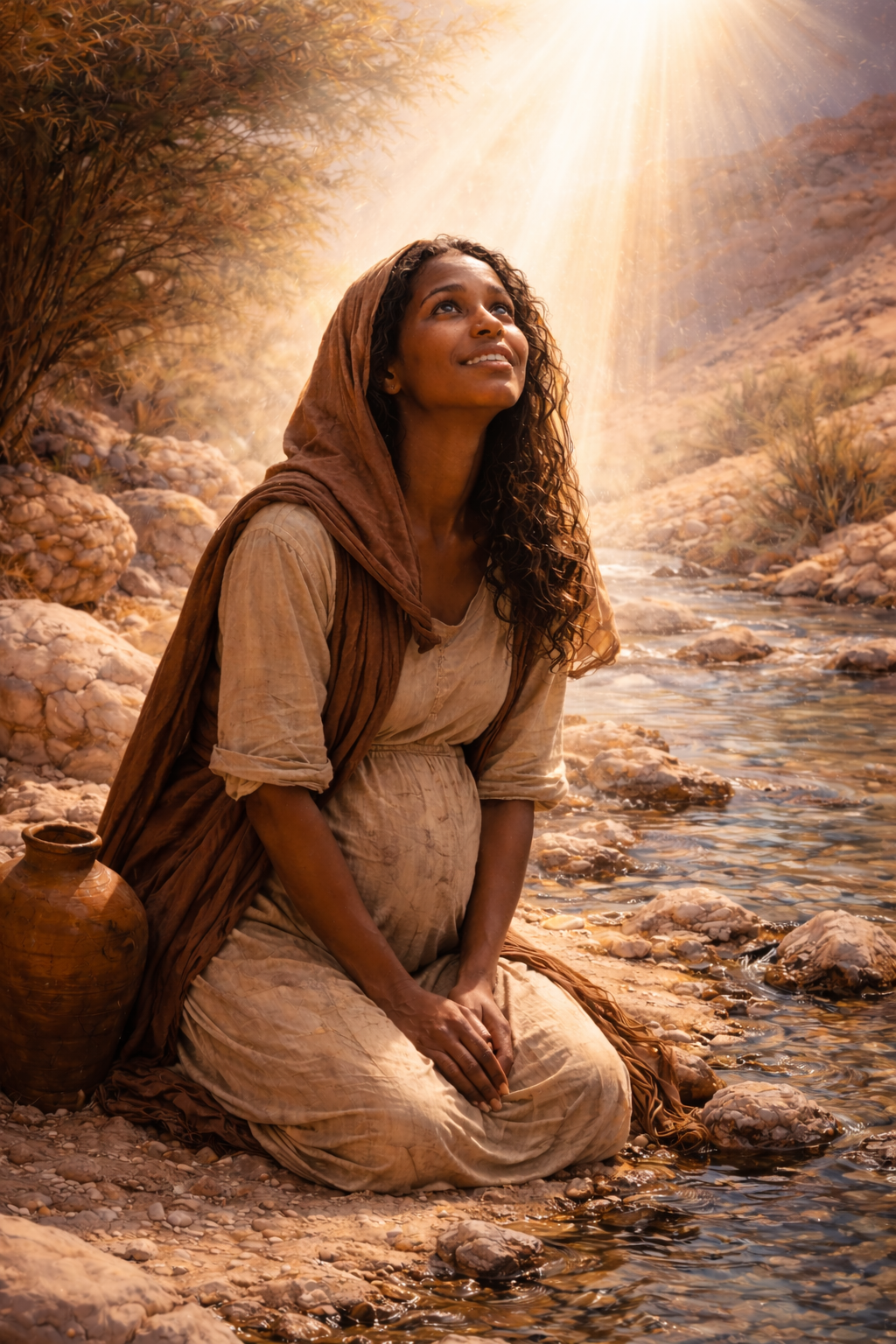
So she named the Lord who spoke to her, “You are El-roi,”
Genesis 16:13
“She gave this name to the Lord who spoke to her: “You are the God who sees me,” for she said, “I have now seen the One who sees me. That is why the well was called Beer Lahai Roi; it is still there, between Kadesh and Bered.”Genesis 16:13-14
Recently, during a Growth Group session, we journeyed with the story of Hagar as part of our journey through my devotional “For Those Who Care: Reflections to Nourish the Caregiver. “ While the title names caregivers, this space is not limited to those who identify that way. Our growth group is filled with people who give care in many forms—tending to family, showing up for work and community, holding emotional space, serving faithfully, and navigating responsibilities that often go unseen. All of us gift care in some way, and all of us need reminders to tend to ourselves as we do.
In that shared space, Hagar’s story met us with uncommon tenderness. In Genesis 16, Hagar—a marginalized, enslaved Egyptian woman—finds herself alone in the wilderness. There, she encounters a God who sees her fully. So much so that she gives God a name: El Roi (אֵל רֳאִי)—the God who sees me. This is the first recorded moment in Scripture where a human being names God. Hagar names God not from a place of comfort, but from survival. She names God because she has been seen—seen in her fear, her exhaustion, her displacement, and her humanity.
As the facilitator of this growth group, I am continually reminded that the work is not about having the right words, but about creating space—space where people can show up honestly, name what they are carrying, and be met with gentleness. Hagar’s naming of God invites us into that kind of space: one where being seen is not a reward for strength, but a gift offered in vulnerability.
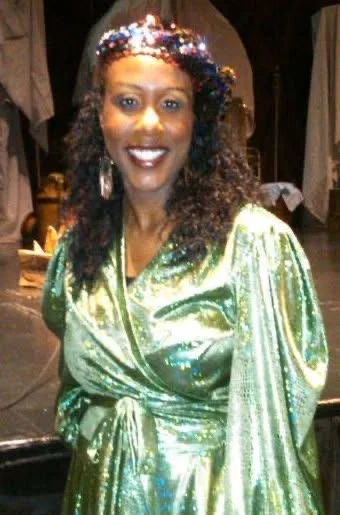
My role as the Angel who spoke to Hagar in my Sisterfriend Rev Dr Monique Crain Spells’ play.
I was reminded of this again while reflecting on a time I portrayed the angel who speaks to Hagar in a play written by my creative friend, Rev. Dr. Monique Crain Spells. One of the most sacred lines from her play continues to echo in my spirit:
“When your heart cries out and your mouth says nothing, I still hear you.”
Those words feel like a living reflection of El Roi. God’s seeing is not dependent on our ability to articulate pain. Even when our voices fail—when silence is all we have—the cry of the heart is still heard. Hagar did not have to perform her pain to be recognized. She was seen in the quiet ache of her becoming.
When I think of El Roi, I also think of the word Sawubona, a Zulu greeting often translated as “I see you.” But its meaning reaches deeper.
Sawubona affirms presence, dignity, and wholeness. It says: I see you in the fullness of who you are in this season and in this time.
The traditional response to Sawubona is Ngikhona—“I am here.” Together, they form a sacred exchange: to be seen and to be present. What God names in El Roi, we are invited to practice with one another.
In these tender times we are living in, when so many feel overlooked or worn thin, Hagar’s story invites us into a sacred practice: to see one another as we are—without rushing, without fixing, without turning away.
May we remember the God who sees.
And may we practice seeing each other with that same holy attentiveness.
I see you.
El Roi names the God who sees; Sawubona invites us to live that seeing out loud.